Ever found yourself staring at your Wi-Fi network list, knowing you’re connected but having no clue what the password is? Maybe you need to give it to a guest or set up a new device. This tutorial is for anyone who’s comfortable opening a terminal (Command Prompt, macOS Terminal, or Linux terminal) and wants to dig that saved password out without downloading sketchy third‑party apps. By the end, you’ll have the plain‑text password for any Wi‑Fi network your computer has ever connected to—Windows, macOS, or Linux.
We’ll keep it casual and step‑by‑step. No prior terminal wizardry required—just copy the commands as written. If you prefer a graphical approach, check out our wifi password recovery free guide for other methods, or the wifi password recovery for windows 10 pc article for a GUI alternative. Ready? Let’s get that password back.
What You’ll Need
- A Windows PC, Mac, or Linux machine that has previously connected to the Wi‑Fi network you want to recover.
- Administrator or sudo access (you’ll need to run commands with elevated privileges).
- The name (SSID) of the Wi‑Fi network—if you don’t remember it, just look at the list of saved networks in your OS settings.
- A terminal application: On Windows, use Command Prompt or PowerShell. On macOS, open Terminal. On Linux, any terminal emulator works.
Step 1: Windows — Dump Saved Wi‑Fi Profiles
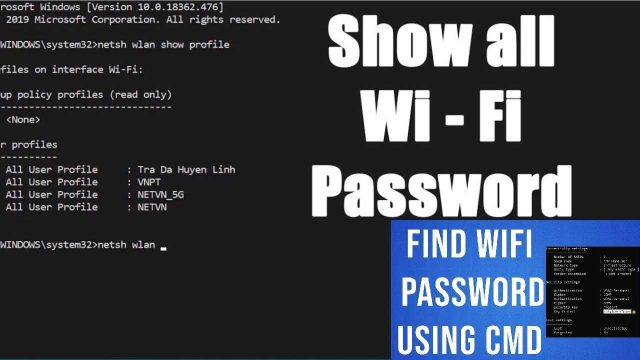
Open Command Prompt as Administrator (right‑click and select “Run as administrator”). In the dark window, type the following and press Enter: netsh wlan show profiles. This lists every Wi‑Fi network your Windows PC has saved. Find the one you want—say “HomeWiFi”. Then run: netsh wlan show profile name="HomeWiFi" key=clear. Look for the line labeled “Key Content”—that’s your password in plain text. Write it down or share it instantly. For more options, see the wifi password recovery for windows 10 pc article.
Pro tip: If the network name has spaces, keep the quotes around it. And if you’re on an older Windows version, the command is the same. No need for any extra software—everything’s built in!
Step 2: macOS — Using the Keychain from Terminal

On a Mac, open Terminal from Applications > Utilities. Your saved passwords live in the Keychain, and you can access them with a single command. Type: security find-generic-password -wa "YourWiFiSSID" (replace YourWiFiSSID with your network’s actual name). Hit Enter. It’ll ask for your Mac’s login password (not the Wi‑Fi one) or use Touch ID—then boom, the Wi‑Fi password appears in your terminal. If you get an error, double‑check the SSID spelling—it’s case‑sensitive. For a deeper dive into macOS password recovery, visit the restore wifi passwords from cloud post.
This method works for all Wi‑Fi networks your Mac has ever joined. It’s perfect for quick sharing without digging through Keychain Access. If you’re helping a friend with an Android device, check out wifi password recovery android for a different approach.
Step 3: Linux — Reading NetworkManager Configs

Linux stores Wi‑Fi passwords in plain text (yes, really) inside /etc/NetworkManager/system-connections/. Open a terminal and become root with sudo -s or prepend sudo to every command. List saved connections: ls /etc/NetworkManager/system-connections/. You’ll see files named after each SSID. Pick yours and view it: sudo cat /etc/NetworkManager/system-connections/YourSSID. Look for the line psk=—that’s your password. For non‑NetworkManager setups (like wpa_supplicant), the password is usually in /etc/wpa_supplicant/wpa_supplicant.conf. See the wifi password recovery open source guide for more Linux tips.
This method is super fast and works on most distributions (Ubuntu, Fedora, etc.). If you’re using a school or enterprise network, sometimes the password is rotated—check the school wifi password recovery article for extra steps.
Common Pitfalls
- **Forgetting to run as administrator / root.** On Windows, the
netshkey=clear flag won’t show the password unless you’re admin. On macOS, you still need your login password. On Linux, you need sudo. If you see “Access denied” or “could not find item”, elevate your privileges. - **Typos in the SSID.** Network names are case‑sensitive and often have hidden characters. Double‑check the exact spelling from the list of saved profiles. On Windows, use
netsh wlan show profilesto copy the exact name. On macOS and Linux, check withnetworksetup -listpreferredwirelessnetworks(macOS) or simply list the files in the system‑connections folder. - **The network hasn’t been saved in the first place.** These methods only work for networks your computer has previously connected to and stored. If you’ve never joined the network, or if you cleared the saved networks, the terminal can’t help. You’ll need to ask someone who has the password, or reset the router.
Where to Next
Now you’ve got your Wi‑Fi password back, consider saving it somewhere safe (like a password manager) so you don’t have to repeat these steps. If you frequently forget passwords, check out the wifi password recovery free guide for automated tools. And if you’re ever locked out of your own router, the wifi password recovery for windows 10 pc walkthrough shows how to access the router’s admin panel. Thanks for following along—happy connecting!