You just brought home a new laptop, a friend wants to hop on your Wi-Fi, or maybe you’re setting up a smart speaker—and you realize you’ve completely forgotten the home WiFi password. It happens to the best of us. This guide walks you through several ways to recover that password using devices you already own: your Windows PC, Mac, Android phone, or even the router itself. No shady third‑party apps required.
By the end of this tutorial you’ll be able to retrieve your saved WiFi password in under two minutes, on whichever device is still connected. Let’s get your network back in your hands.
What You’ll Need
- A computer or phone that is already connected to your home WiFi (or physical access to the router).
- For Windows users: Windows 10 or 11 (the steps are nearly identical).
- For Mac users: macOS Sierra or later (Keychain Access works on older versions too).
- For Android users: A phone running Android 10 or newer (the steps vary slightly by manufacturer).
- A web browser if you decide to log into your router’s admin panel.
Step 1: Check the Router Sticker (Easiest)
Before diving into device settings, take a look at your router. Most Internet Service Providers (ISPs) print the default WiFi network name (SSID) and password on a sticker on the bottom or back of the router. If you’ve never changed your WiFi password, this is the quickest fix. Just type it in and you’re done.

If you changed your password in the past and don’t remember it, move on to Step 2.
Step 2: Recover WiFi Password on Windows 10 / 11
Windows stores every WiFi network’s password in the system’s credential manager. Here’s how to pull it up:
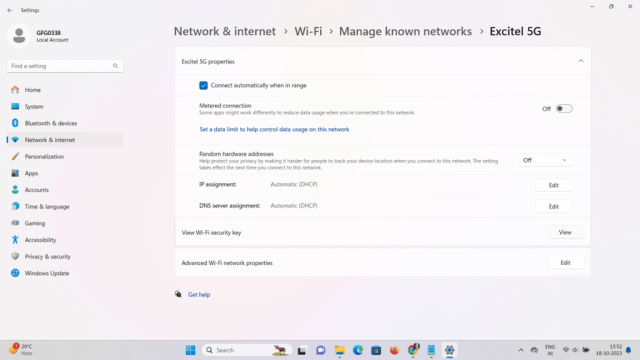
- Open the Start Menu and go to Settings > Network & Internet > Status (or simply type “Network” in the search bar).
- Click on “Network and Sharing Center” (it’s near the bottom).
- In the left pane, click on “Change adapter settings”.
- Right‑click your active WiFi adapter and select “Status”.
- Click the “Wireless Properties” button, then switch to the “Security” tab.
- Check the box next to “Show characters”. Your WiFi password will appear in the “Network security key” field.

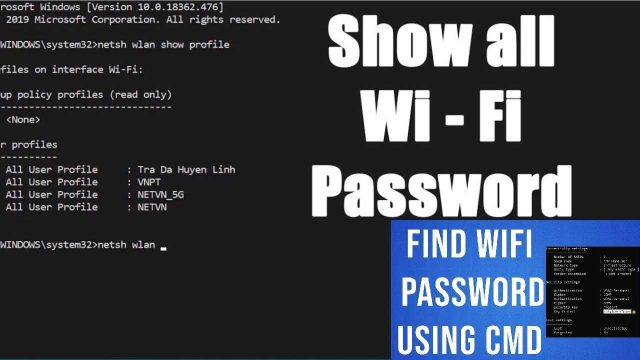
That’s it. Write it down or copy it to a note. If you prefer a more advanced method using the command line, check out our Terminal edition for a faster trick.
Step 3: Recover WiFi Password on macOS
Macs store WiFi passwords in the Keychain Access app, which is essentially a secure password manager built into macOS.
- Open “Keychain Access” from Applications > Utilities or by searching with Spotlight (Cmd+Space).
- In the search bar (top‑right), type the name of your WiFi network (SSID).
- Double‑click the network entry that appears. A window will pop up.
- Check the box “Show password” and enter your Mac’s administrator username and password when prompted.
- Your WiFi password will be revealed in the text field.
Easy, right? If you want to keep a copy for future use, learn how to backup WiFi passwords on Mac so you never have to dig through Keychain again.
Step 4: Recover WiFi Password on Android (Gallery Method)
On Android 10 and later, you can view a saved WiFi password directly from the network settings. The exact steps vary slightly by manufacturer, but the core method is:
- Open the Settings app and go to “Network & Internet” > “Wi‑Fi”.
- Tap the gear icon next to your connected network (or long‑press the network name).
- Select “Share” (or “QR code”). A QR code will appear on screen.
- Below the QR code, your password is usually displayed in plain text. If not, take a screenshot of the QR code and use another phone to scan it—the password is embedded in the QR data.

This method works without root access. For a deeper dive into other Android tricks, see our WiFi password recovery on Android guide. If you don’t have a phone handy, you can also use a QR code reader on a computer.
Step 5: Log into Your Router’s Admin Panel
If none of the above devices are connected, but you can physically access the router, you can find the WiFi password from the router’s web interface.
- Connect a computer or phone to the router via an Ethernet cable, or use a guest network if available.
- Open a web browser and type your router’s gateway IP address (commonly 192.168.0.1, 192.168.1.1, or 10.0.0.1). You can find this IP by checking your device’s network settings.
- Log in with the router’s admin credentials. If you never changed them, the default username and password are often printed on the same sticker from Step 1 (e.g., admin/admin or admin/password).
- Navigate to the “Wireless” or “Wi‑Fi” settings section. Look for a field labeled “Pre‑Shared Key”, “Passphrase”, or “Password”. The current WiFi password will be shown there.

Once you’re in, you can also change the password to something you’ll remember. For advanced users, open source tools like RouterSploit can help if you’ve forgotten the admin login, but that’s a more technical path.
Common Pitfalls
- **Can’t find the router sticker?** Some ISPs place the sticker on the power adapter or inside the box. If you’ve tossed those, check the manufacturer’s manual online for default credentials.
- **Forgot the router admin password?** Most routers have a physical reset button (a pinhole). Press and hold it for 10 seconds to factory reset the router. This will erase all custom settings, including your WiFi password, which reverts to the sticker default. Use this as a last resort.
- **Android password not showing?** Some manufacturers (Samsung, Xiaomi) hide the password behind an extra “Share” step. Try scanning the QR code with a third‑party scanner app—the password is encoded in the QR data as `S:SSID;P:password;`.
The fastest way to recover your WiFi password is usually the router sticker. If that fails, your connected device’s settings are your best bet.
WiFi Password Recovery Team
Where to Next
Now that you’ve recovered your password, consider storing it somewhere safe—like a password manager or a note in your phone. If you ever lose access to all devices, a free WiFi password recovery tool run from a bootable USB can still save the day. For a completely offline approach, our open source tools guide walks you through command‑line recovery. And if you’re curious about the Terminal edition, it’s a geek‑favorite method that works on any OS. Stay connected!