Ever been in that awkward spot where you need to connect a new device to your WiFi, but you can’t remember the password? Maybe it’s printed on the router, but that’s buried behind furniture, or the sticker has faded. Don’t worry—you don’t need to download any sketchy software to get it back. Your computer or router already has everything you need. This guide is for anyone who’s locked out of their own network and wants a quick, safe way to recover the password using only built-in tools. By the end, you’ll have your WiFi password in hand, no third-party apps required.
We’ll cover four main methods: using Windows Command Prompt, Mac Keychain Access, Linux terminal, and your router’s admin page. All are free, built-in, and work with most networks. If you just need to see the password for the network you’re currently connected to, some methods are even faster. Let’s dive in.
What You’ll Need
- A computer that is already connected to the WiFi network (or has connected before).
- Administrator or root access on that computer (you can usually enter an admin password when prompted).
- For the router method: physical access to the router or its login credentials (often printed on the router).
- No third-party software—just built-in operating system tools or a web browser.
Step 1: Recover WiFi Password on Windows Using Command Prompt
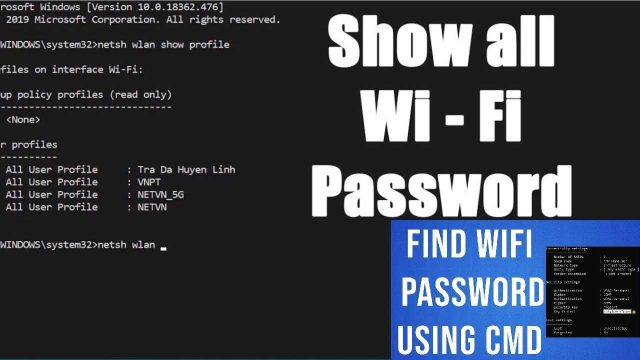
Windows stores every WiFi network you’ve ever connected to in a profile. You can access those passwords through the Command Prompt without any extra tools. This method works on Windows 7, 8, 10, and 11. First, open Command Prompt as an administrator—click Start, type ‘cmd’, right-click on Command Prompt, and select ‘Run as administrator’. If prompted by User Account Control, click Yes.

Once the black window opens, type the following command and press Enter: netsh wlan show profiles. This lists all saved WiFi networks. Find the name (SSID) of the network whose password you want. Then type: netsh wlan show profile name="YourNetworkName" key=clear, replacing ‘YourNetworkName’ with the actual name. Look for the line that says ‘Key Content’—that’s your password. For a complete walkthrough, check out our guide to view saved wifi password windows.

Step 2: Recover WiFi Password on macOS Using Keychain Access
Mac users have it even easier. macOS stores passwords in the Keychain Access app. Open it by going to Finder > Applications > Utilities > Keychain Access, or search for it with Spotlight (Cmd+Space). In the left sidebar, click on ‘System’ under Keychains, then look for the name of your WiFi network. It’ll usually start with ‘AirPort’ or the network name.

Double-click the network entry, then check the box ‘Show password’. You’ll need to enter your Mac’s admin username and password. After that, the WiFi password will be revealed in plain text. That’s it—no software needed. Your Mac’s built-in password manager at work.

Step 3: Recover WiFi Password on Linux Using Terminal
Linux users aren’t left out. NetworkManager stores WiFi passwords in cleartext in configuration files. Open a terminal (Ctrl+Alt+T) and type: sudo cat /etc/NetworkManager/system-connections/* and press Enter. You’ll see a list of connection profiles. Scroll through until you find the SSID you need, then look for the line starting with psk=. That’s your password. Alternatively, use sudo grep psk= /etc/NetworkManager/system-connections/* to show them directly. For more details, read our dedicated post on saved wifi password recovery linux.

Step 4: Recover WiFi Password From Your Router’s Admin Page
If you can’t access any computer that has the network saved, go straight to the source: your router. Connect a device (like a phone or laptop) to the router via Ethernet cable, or use an existing WiFi connection if you have one. Open a web browser and type your router’s IP address—often 192.168.1.1 or 192.168.0.1. You’ll need the admin username and password. If you never changed it, check the sticker on the router itself.
Once logged in, look for a section named ‘Wireless’, ‘WiFi’, or ‘Security’. The password will be displayed next to ‘Wireless Password’, ‘Pre-Shared Key’, or ‘Passphrase’. Copy it down. This method works for almost any router brand. For a step-by-step guide with screenshots, see our article on how to recover wifi password from router.
Common Pitfalls
- Command Prompt not run as admin: If you skip the ‘Run as administrator’ step, the netsh command will show an error because it doesn’t have permission to show the key. Always right-click and select ‘Run as administrator’.
- Wrong router IP address: If you can’t log into your router, the default IP might be different. Check your network settings for the Default Gateway, or look up your router model online.
- Mac Keychain prompts for wrong admin password: If you don’t know your Mac’s admin password, you can’t view the password. You may need to reset your admin password first or use another method.
Where to Next
You’ve just recovered your WiFi password using only built-in tools. No downloads, no risk. If you want to keep a backup of all your saved WiFi passwords, check out our guide to free wifi password recovery for windows that exports them all at once. For a truly portable solution, learn how to build your own wifi password recovery portable USB toolkit. And if you’re helping a friend who doesn’t have admin access, check our tips for wifi password recovery without root. Happy surfing!