You’re sitting in front of your Windows PC, the internet is working fine, but your roommate just asked for the WiFi password and your brain is a total blank. No worries—if your computer is already connected to that network, the password is stored safely inside Windows. In this guide, I’ll show you three dead-simple ways to dig it out using nothing but tools that came with your PC. By the end, you’ll have that password copied and ready to share, no third-party app needed.
This tutorial is perfect for anyone who has ever connected to a WiFi network on a Windows machine—whether it’s Windows 10 or 11—and now needs the password again. We’ll start with the easiest method (point and click), then move to the old-school command line trick that never fails. If you’re comfortable with PowerShell, we’ll even show you a one-liner that gets the job done fast. Let’s get you back in control.
What You’ll Need
- A Windows PC (10 or 11) already connected to the WiFi network whose password you want.
- Administrator access on that PC (you should be the main user or know the admin password).
- Optional: a USB drive if you plan to backup passwords (see our wifi password recovery with usb backup guide).
Step 1: Recover Your WiFi Password via Windows Settings (GUI)
This is the most straightforward method—perfect if you prefer clicking buttons over typing commands.

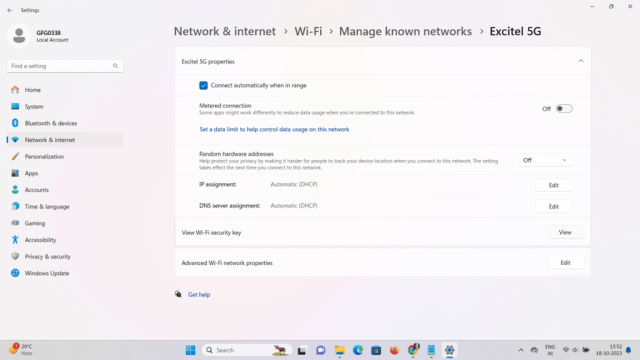
Click the network icon in the system tray (bottom-right) and select ‘Network & Internet settings’. Then click ‘Advanced network settings’ and choose ‘More network adapter options’. Right-click your active WiFi adapter and select ‘Status’. In the pop-up, click ‘Wireless Properties’, then switch to the ‘Security’ tab. Check the box that says ‘Show characters’—bam, your password appears in the ‘Network security key’ field. You can even jot it down right there.
If this method feels too clunky, you can also try the classic Control Panel route: open Control Panel > Network and Sharing Center > click on your WiFi name > Wireless Properties > Security tab. Same result. This approach works for any Windows version since Windows 7, so it’s a reliable standby.
Step 2: Recover Your WiFi Password Using Command Prompt (netsh wlan)
The command-line method is faster once you get the hang of it. Plus, you can view all saved networks at once—handy if you’ve connected to dozens of hotspots. If you prefer a graphical approach, you can also find saved wifi password using cmd and export it.
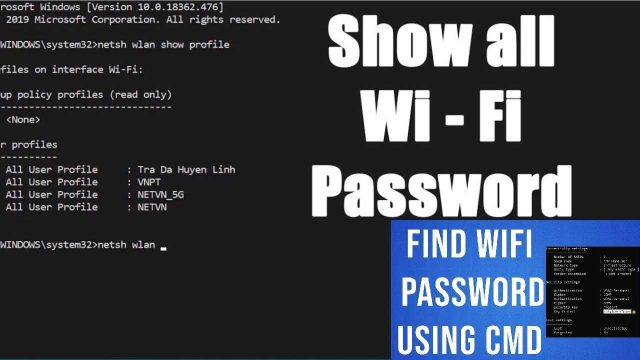
Press the Windows key, type ‘cmd’, right-click ‘Command Prompt’, and select ‘Run as administrator’. Accept the UAC prompt. Now type exactly this and press Enter: netsh wlan show profile. You’ll see a list of every network your PC has ever connected to. Find the one you need (say, ‘HomeSweetHome’) and type: netsh wlan show profile name=HomeSweetHome key=clear. Look for the ‘Key Content’ line under the Security settings section—that’s your password. Copy it down or take a photo.
Pro tip: if the network name has spaces, put it in quotes, like name="My Network". This trick works on Windows 10, 11, and even older versions back to Vista. For a deeper dive into the CMD method, check out our tutorial on view saved wifi password using cmd.
Step 3: Recover Your WiFi Password Using PowerShell (Alternative)
PowerShell adds a touch of elegance—and it’s just as easy. If you’re already using PowerShell for other tasks, this is a natural extension. For a full walkthrough, see our wifi password recovery tutorial powershell.
Open PowerShell as Administrator (right-click Start > Windows PowerShell (Admin)). Type the same netsh commands from Step 2—they work identically in PowerShell. Or, for a cleaner output, you can combine commands: netsh wlan show profile name="YourNetworkName" key=clear | Select-String “Key Content”. The password appears right after the colon. You can also pipe the output to a text file for safekeeping: netsh wlan show profile name="YourNetworkName" key=clear > C:wifi-password.txt. That way you have a backup.
Common Pitfalls
- Running the command without administrator privileges: If you forget to run Command Prompt or PowerShell as admin, you’ll get an error like “The wireless interface is not turned on” or “Access is denied.” Always right-click and choose ‘Run as administrator’.
- Trying to recover a password for a network your PC has never connected to: The netsh method only shows profiles stored on your machine. If you’re trying to get a password for a network you’ve never joined, you’ll need to ask the router admin or use a recovery method from the router itself.
- Mistyping the network name (especially spaces or special characters): If the name contains a space, you must enclose it in double quotes. If you get “Profile is not found,” double-check the exact spelling and case—though Windows is case-insensitive, it’s still picky about spaces.
Where to Next
Now that you’ve got your password back, there are plenty of other ways to recover, backup, and manage your WiFi keys. If you’re into all-around solutions, check out our complete wifi password recovery solutions. For Mac users, we have a guide on using the Keychain on a MacBook Pro. And if you ever need to recover forgotten wifi password on desktop from a different angle, we’ve got you covered. Stay connected!