Ever needed to check a WiFi password but couldn’t find it? Whether you’re setting up a new device or helping a friend, it’s frustrating when you can’t remember the network key. Fortunately, if you’re on Windows, there’s a quick way to view saved WiFi passwords using Command Prompt (CMD) without any extra software. This guide walks you through the process step by step.
By the end of this tutorial, you’ll be able to pull up any WiFi password that your computer has ever connected to. All you need is a Windows PC with administrator access and a few minutes. Let’s get started.
What you’ll need
- A Windows PC (Windows 7, 8, 10, or 11)
- Administrator access to your computer
- A WiFi network that you’ve connected to before (its profile must be saved)
Step 1: Open Command Prompt as Administrator
First, you need to launch Command Prompt with admin rights. Press the Start button, type ‘cmd’, then right-click on Command Prompt and select ‘Run as administrator’. If prompted by User Account Control, click Yes.

Step 2: List all saved WiFi profiles
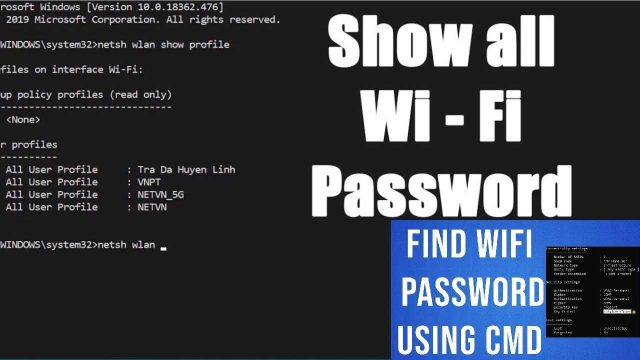
Type the following command and press Enter: netsh wlan show profiles. This will display a list of all WiFi networks your PC has saved.
Step 3: Identify the network
Look through the list and find the name (SSID) of the network whose password you want. Write it down exactly as it appears (case-sensitive).
Step 4: Show the password for that network
Now type this command, replacing ‘NETWORKNAME’ with the actual name you noted: netsh wlan show profile name=”NETWORKNAME” key=clear. For example, if the network is ‘HomeWiFi’, you’d type: netsh wlan show profile name=”HomeWiFi” key=clear.
Step 5: Locate the password
Scroll through the output until you see the line that says ‘Key Content’. The text next to it is your WiFi password. It will be in plain text, so you can copy it or write it down.
Common pitfalls
- Not running CMD as administrator: you’ll get an error like ‘Access is denied’. Make sure you right-click and select ‘Run as administrator’.
- Typo in the profile name: WiFi names are case-sensitive and may include spaces, so double-check the exact spelling.
- Network not saved: if you’ve never connected to that network, it won’t appear in the list. You need to have connected at least once.
Where to next
Now you know how to view saved WiFi passwords using CMD. If you want to explore other recovery methods, check out our guides on how to recover wifi password on windows using PowerShell (wifi password recovery tutorial powershell), or using your router’s login page (wifi password recovery with router login). For a no-command-line approach, see wifi password recovery no command line. And if you prefer digging into the registry, our wifi password recovery command from registry might interest you. For home users, we have a dedicated wifi password recovery for home users guide.